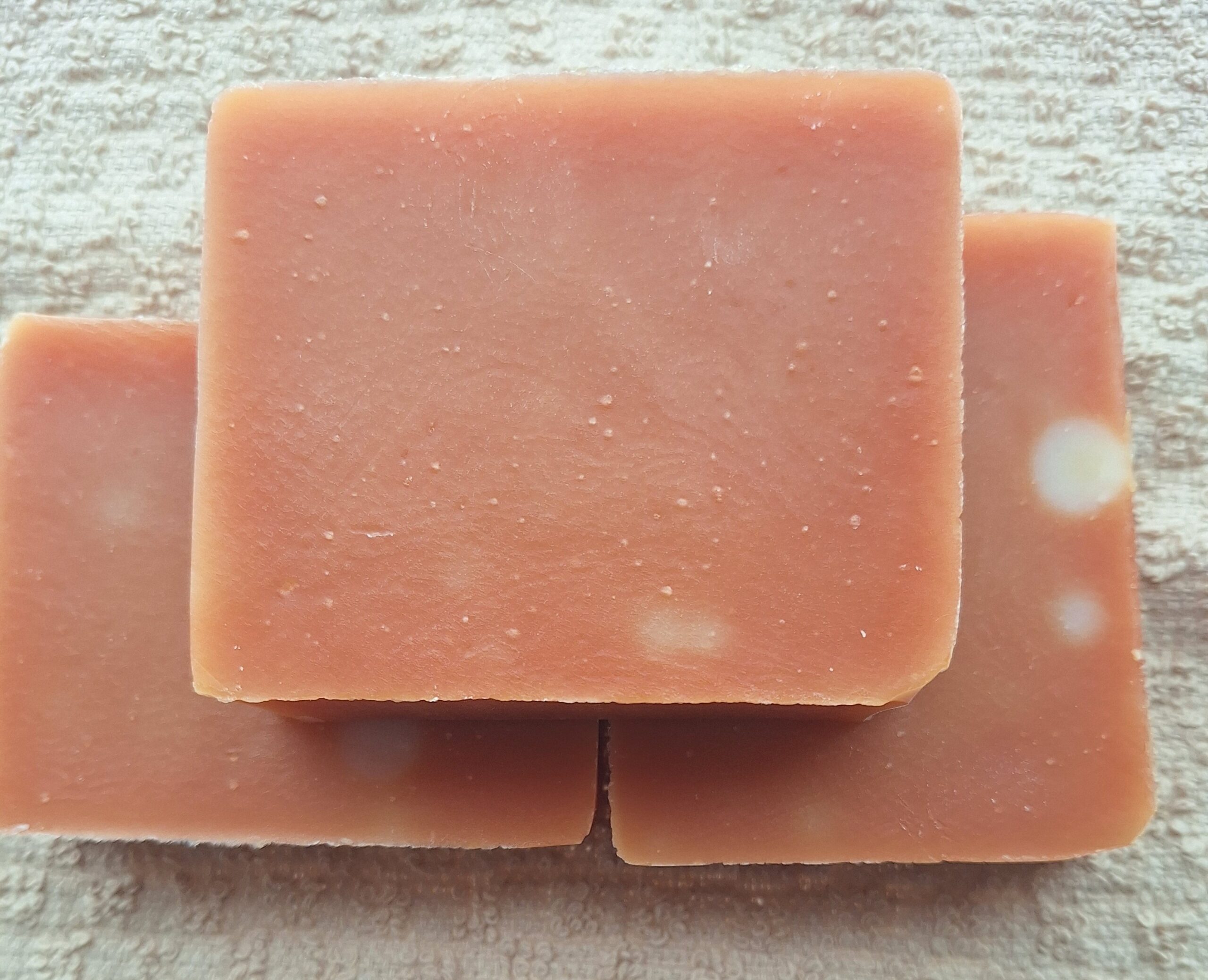
Since learning how to make soap, this is the first time that I have encountered white spots on my soap. Otherwise known as stearic acid spots. But as one continues to make soap, eventually you are going to run into soaping problems. It’s inevitable.
This learning experience was the result of my intentions to reduce the time that it takes for the lye water solution to cool down, and to cut down or eliminate the fumes from the mixing of the sodium hydroxide and water. So, instead of using cool distilled water (which I usually do), I decided to use ice cubes. That made the water very cold.
The lye water never rose to a warm temperature; it stayed cold throughout the process. With the combination of the oils at 100 degrees Fahrenheit and the lye water at 40 degrees Fahrenheit, I was not surprised at the outcome. Stearic acid spots can occur when soaping at a cold temperature.
Using saturated fats in the formulation such as palm oil and coconut oil (hard oils) and then pouring cold lye water into the warm oils did not help.
Going forward, I will soap at a temperature that is above 90 degrees Fahrenheit (lye water and oils) to prevent stearic acid spots.
Leave a Reply