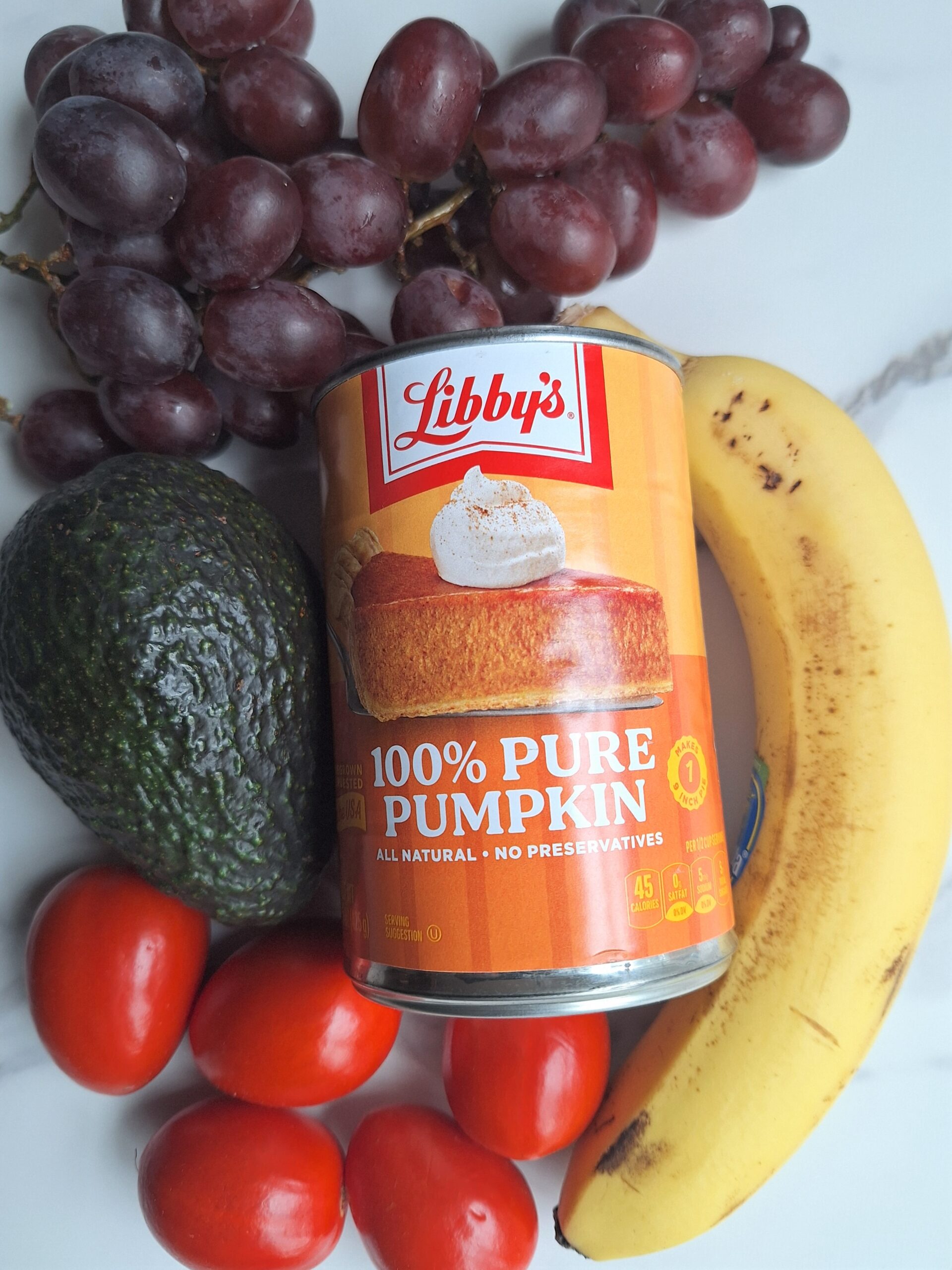
The first fruit that I used in cold process soap was avocado. From that moment I knew that I wanted to experiment and make more soaps with fruits. Adding fruits to your soap adds color, nutrients, and increases lather.
You can make your own puree or you can go to the supermarket and buy baby food that is a puree; making sure that there are no additives. I prefer to make my own knowing that there is no added sugar.
Some soap makers add the puree at trace and some add the puree directly to the oils, which is my preference. I try to add no more than 4 ounces of the puree so that I don’t introduce mold and bacteria into the soap. I use 1 ounce of the puree per pound of oils.
I formulate my recipe and if for example, the total oils in my recipe is 32 ounces, and the total water is 12 ounces, and I will be using 2 ounces of the puree, I will deduct 2 ounces from the distilled water. Which means that the water in my recipe will now be 10 ounces because I will be using 2 ounces of the puree.
Using a blender will create a smooth puree so that there will not be any clumps of the fruit. Fresh fruit in soap can go bad, but with soap having a high pH level it should prevent the soap from going bad. It is not good to overdo it by adding too much puree to the recipe.
Making soap with fruits will cause the soap to heat up because of the sugar in the fruit. So, it’s best to soap at a cool temperature. I soap at 100 degrees Fahrenheit.
Because insulating the soap can cause overheating, I don’t insulate the soap. I put the soap in the freezer for about 7 hours, then bring it to the refrigerator part. Then in the morning, I take it out of the refrigerator to continue saponification.
Unmold after 24 to 48 hours and let the soap cure for 4 to 6 weeks.
Leave a Reply